A complete career guide — from choosing the right makeup artist course to building skills, gaining experience, and starting your career with TRIQOS.
Trusted by Industry Leaders





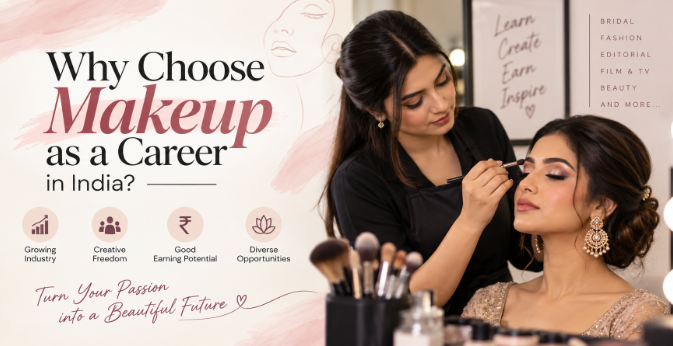
Your makeup skills can become a career when you know how to turn creativity into professional expertise. Makeup is no longer limited to weddings and special occasions. Today, people hire makeup professionals for fashion shoots, films, social media content, parties, events, and personal styling.
If you enjoy makeup and want to turn that interest into a career, becoming a professional makeup artist can be a rewarding path. However, talent alone is not enough. You also need proper training, practical experience, client-handling skills, hygiene knowledge, and a strong portfolio.
Here is a step-by-step guide to help you understand how to start and grow your makeup career in India.
A professional makeup artist helps clients create a specific look based on their occasion, features, outfit, skin type, and personal preferences.
Their work can include:
A good makeup artist does more than simply apply products. They understand facial features, skin preparation, colour combinations, product selection, and the overall look a client wants to achieve.
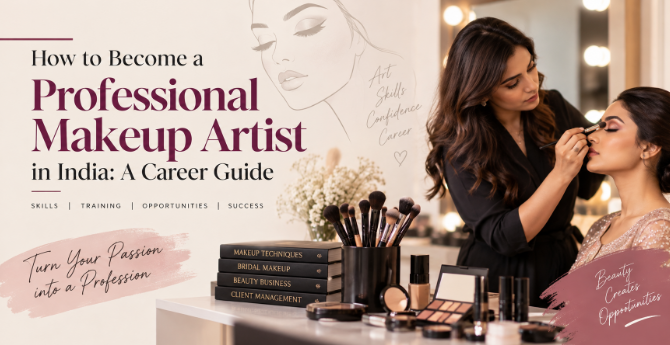
The beauty industry offers several career paths for creative individuals. Social media has also made it easier for makeup artists to showcase their work and connect with potential clients.
You can work independently, join a salon, assist established artists, work with photographers and fashion professionals, or eventually build your own beauty business.
For businesses such as Triqos, the growing importance of digital visibility also shows how personal branding and online presentation can influence how professionals are discovered by potential customers.
Before investing in expensive products or professional tools, learn the fundamentals.
Start with:
Understanding the basics gives you a strong foundation and makes it easier to develop your own style later.
A makeup artist course can help you learn techniques in a structured way instead of relying only on trial and error.
When comparing different training options, consider the course curriculum, practical exposure, trainer experience, certification, and the type of beauty skills you want to develop. If you are interested in broader beauty-industry training, exploring an International Beauty Course can also help you understand different career pathways and specialisations.
When comparing courses, look at:
Don't choose a course only because it is popular or expensive. Focus on whether it gives you enough practical exposure.
Good makeup artist training should combine theory with hands-on practice.
You should learn how different products work, how to prepare different skin types, how to create different looks, and how to maintain hygiene.
Practical training is especially important because makeup techniques can look simple when demonstrated but require considerable practice to perform confidently on real clients.
Practice is where your skills actually develop.
Start by practising on yourself, friends, family members, or models. Try different face shapes, skin tones, eye shapes, and makeup styles.
Take photographs of your work after every session. This will help you identify areas where your technique needs improvement.
Every client has different skin needs. You should understand the basics of:
| Skin Type | What a Makeup Artist Should Consider |
|---|---|
| Oily | Oil control and suitable base products |
| Dry | Hydration and proper skin preparation |
| Combination | Balancing dry and oily areas |
| Sensitive | Gentle products and careful application |
| Normal | Maintaining skin balance and choosing the right finish |
Product knowledge also matters. You don't need every product available in the market. Instead, learn which products work for different skin types, finishes, occasions, and budgets.
Your kit should contain reliable essentials rather than unnecessary products.
A basic professional kit may include:
As your career grows, you can gradually expand your collection based on your clients' requirements.
Hygiene is one of the most important parts of professional makeup artistry.
Always clean and sanitise reusable tools properly. Avoid double-dipping into products and use disposable applicators wherever appropriate.
A hygienic setup protects your clients and also makes you appear more professional and trustworthy.
Your portfolio is one of your most powerful marketing tools.
Include clear, high-quality photographs showing different types of work. Try to demonstrate bridal, party, natural, glam, and editorial looks if they match your services.
Before-and-after photographs can also help potential clients understand your technique.
Your portfolio should communicate not just that you can apply makeup, but that you can create polished looks for different people and occasions.
Once you have learned the fundamentals, start working with real people.
You can:
Early experience may not always bring high income, but it can help you develop speed, confidence, communication skills, and problem-solving ability.
Makeup is a personal service. Clients want to feel heard and understood.
Before starting, ask questions about the occasion, preferred look, outfit, timing, skin concerns, and expectations.
A professional makeup artist should know when to suggest an idea and when to respect the client's preference.
Clear communication can turn a one-time client into a repeat customer.
Once your skills improve, start thinking like a business owner.
Choose a professional name, create consistent branding, showcase your portfolio, and clearly communicate your services.
Your online presence should make it easy for potential clients to understand who you are, what you offer, and how they can contact you.
This is where digital branding becomes valuable. Just as businesses such as Triqos focus on creating a clear online presence, makeup artists can use consistent branding to become easier to discover and remember.
Instagram and other visual platforms can be extremely useful for makeup artists.
Share:
Don't focus only on gaining followers. Your content should also encourage potential clients to enquire about your services.
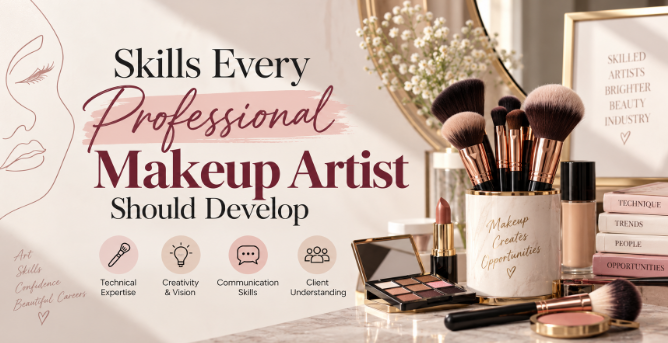
Technical makeup skills are only one part of the career.
| Skill | Why It Matters |
|---|---|
| Makeup technique | Helps create polished and long-lasting looks |
| Product knowledge | Helps you choose suitable products |
| Skin knowledge | Improves preparation and product selection |
| Communication | Helps understand client expectations |
| Time management | Important for weddings and events |
| Hygiene | Protects clients and builds trust |
| Creativity | Helps create personalised looks |
| Photography | Helps present your portfolio effectively |
| Marketing | Helps attract new clients |
| Business skills | Useful for pricing, bookings, and growth |
Developing these skills can make the difference between simply doing makeup and building a sustainable career.
Starting a makeup career can feel challenging. Some common problems include:
The solution is not to become perfect immediately. Focus on improving your technique, gaining experience, and building trust one client at a time.
Income varies significantly depending on experience, location, services, reputation, and type of clients.
Beginners may charge lower prices while building experience. Established artists can charge considerably more, especially for bridal, celebrity, fashion, destination, or specialised makeup services.
Instead of focusing only on a fixed income figure, think about how you can increase your value through better skills, stronger branding, premium services, and repeat clients.
A course is not the only way to become a makeup artist. Some professionals learn through practice, online education, workshops, and mentorship.
However, structured training can shorten the learning curve and help you understand professional techniques, hygiene, products, and client requirements more effectively.
The best approach depends on your learning style, budget, career goals, and available opportunities.
After completing your training and gaining practical experience, you can explore several career options. You can also expand your skill set by learning related beauty services, such as nail art, by exploring Top 10 Nail Art Training Classes, which can open up additional opportunities within the beauty industry:
You can also specialise in one area once you understand which type of work suits your skills and interests.
Keep these practical tips in mind:
The future of makeup artistry is closely connected with social media, personal branding, beauty technology, and changing consumer preferences.
Clients are increasingly exposed to international trends and personalised beauty content. Bridal makeup is also evolving with changing preferences, making it important for artists to stay updated with Makeup Trends for Wedding Brides in 2026 and understand how modern brides are choosing to style their wedding looks. This creates opportunities for artists who can combine technical expertise with creativity and strong communication.
Online visibility will also continue to matter. A makeup artist with strong work and a professional digital presence can reach clients beyond their immediate network.
For brands and professionals, the same principle applies: visibility builds opportunities. Triqos represents the broader importance of digital presence in today's competitive environment, while makeup artists can use these same digital principles to showcase their expertise.
Becoming a professional makeup artist in India is not just about knowing how to apply makeup. It requires technical skills, consistent practice, product knowledge, hygiene, communication, marketing, and business awareness. Start with the basics, choose the right makeup artist course or training path, practise regularly, build a strong portfolio, and gradually gain real-world experience. Most importantly, give yourself time to grow — your first few clients may be the beginning of a much larger career. With the right combination of beauty skills and professional presentation, you can build a strong personal brand and create meaningful opportunities in the beauty industry. Triqos also highlights how important a clear digital presence can be when professionals and businesses want to build visibility and connect with their audience.
Students Placed
Partner Brands
Placement Success Rate
Common Questions
Start by learning makeup fundamentals, completing suitable makeup artist training, practising regularly, building a portfolio, and gaining experience with real clients. You should also develop communication, hygiene, marketing, and business skills.
A course is not mandatory, but structured training can help you learn professional techniques faster. Workshops, mentorship, online learning, and regular practice can also contribute to your development.
Training duration depends on the course and specialisation. Short workshops may take a few days, while comprehensive professional courses can take several weeks or months.
A makeup artist needs technical makeup skills, colour knowledge, product knowledge, creativity, communication, time management, hygiene awareness, and basic marketing and business skills.
Yes. Some artists are self-taught. However, professional training can provide structured learning, practical guidance, and exposure to techniques that may otherwise take longer to master.
Usually replies instantly
Experience world-class training firsthand.