Explore hair styling courses after 12th, the skills you can learn, career opportunities, earning potential, and how to build a professional hairstyling career with TRIQOS.
Trusted by Industry Leaders







Great hairstylists turn creativity into a career people are willing to pay for.
Choosing a career after 12th can feel overwhelming, especially when you want to do something creative instead of following a traditional academic path. If you enjoy experimenting with hairstyles, beauty trends, hair transformations, and working with people, a hair styling course can be a practical career option.
The beauty industry has created opportunities beyond traditional salon jobs. With the right training, aspiring hairstylists can work in salons, bridal beauty, fashion, media, events, or even build their own client base.
In this guide, we’ll explore what to expect from hair styling courses after 12th, the skills you can learn, career options, earning opportunities, and how to choose the right course for your goals.
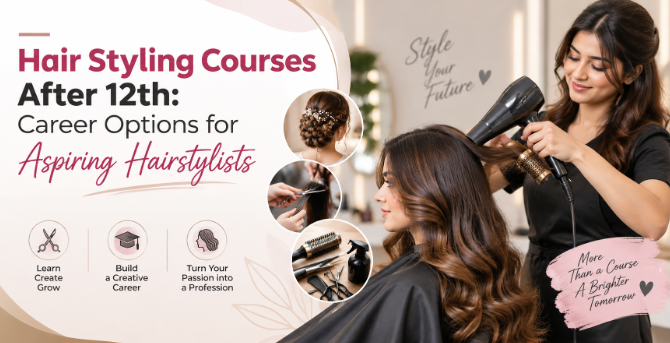
A hair styling course is a professional training program designed to teach students how to create, manage, and maintain different hairstyles.
Depending on the course level, students may learn techniques such as:
A beginner-friendly course can help students build their foundation before moving into advanced styling techniques.
For students who have completed 12th standard, this type of practical education can be an alternative to spending several years in a traditional degree program.
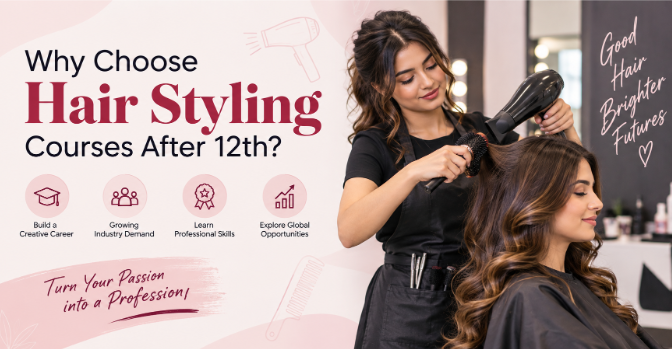
One of the biggest advantages of pursuing a hair styling course after 12th is that it combines creativity with practical skills.
Instead of only learning theory, students get opportunities to practise techniques and understand how professional hairstyling works in real situations.
Starting after 12th gives you more time to practise and develop your personal styling technique. The more you practise, the more confident you become with different hair types, tools, products, and styling methods.
Hairstyling is ideal for people who enjoy creating visual transformations. A simple haircut, colour change, braid, or updo can completely change someone's appearance. This makes hairstyling both creative and rewarding.
You are not limited to working in one type of salon. After gaining experience, you can explore bridal hairstyling, fashion shoots, events, celebrity styling, freelancing, education, or entrepreneurship.
Unlike courses that are heavily theory-based, professional beauty training focuses strongly on hands-on practice. This helps students understand how techniques work on real hair rather than only learning them from textbooks.
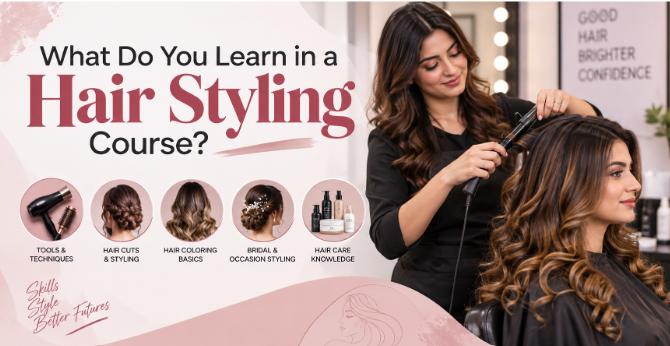
The exact curriculum depends on the institute and course level. However, a good program should cover both foundational and practical skills.
| Skill Area | What You May Learn |
|---|---|
| Hair Basics | Hair types, textures and basic hair care |
| Styling | Blow-drying, curling, straightening and setting |
| Cutting | Basic cutting techniques and sectioning |
| Braiding | Traditional and modern braid styles |
| Updos | Party, event and bridal hairstyles |
| Hair Treatments | Basic professional treatment techniques |
| Tools | Safe and effective use of styling equipment |
| Client Consultation | Understanding client requirements |
| Professional Skills | Hygiene, communication and salon etiquette |
A strong course should give you enough practical exposure to develop confidence rather than simply completing theoretical lessons.
Students often wonder whether they should specialise in hairstyling or choose a broader beauty program. The right option depends on your career goal.
If you already know that hair is your main interest, specialising in hairstyling can help you spend more time developing advanced hair-related skills.
On the other hand, students who want to work across multiple beauty services may prefer a broader program. For example, learning hairstyling alongside makeup or nail services can allow you to offer more complete beauty solutions to clients.
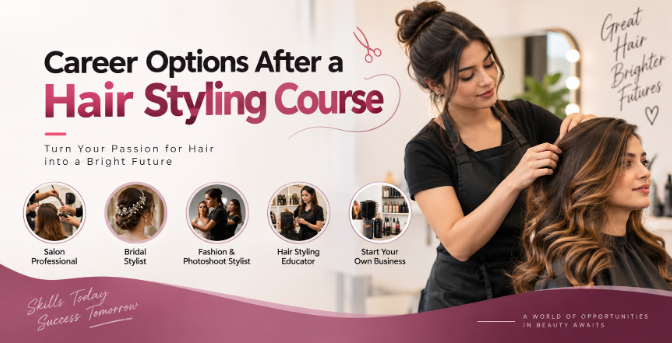
Completing a professional course can open several career opportunities.
Working as a professional hair stylist in a salon is one of the most common career paths. Your responsibilities may include haircuts, styling, blow-drying, event hairstyles, hair treatments, and client consultations. As your experience grows, you can specialise in particular services.
Weddings create strong demand for hairstyling professionals. Bridal hairstylists may create buns, braids, curls, traditional hairstyles, contemporary updos, and hairstyles designed to complement bridal outfits and makeup. This career can also provide freelance opportunities because hairstylists can travel to wedding venues or clients' homes.
Freelancing gives you more flexibility. You can work with individual clients for weddings, parties, photoshoots, events, or personal styling requirements. With strong networking and social media presence, freelancers can gradually build their own client base.
Fashion brands, photographers, models, and creative teams often require hairstylists for photoshoots and campaigns. This career path can be especially interesting for people who enjoy experimenting with creative and trend-driven hairstyles.
Once you gain sufficient technical and business experience, you can consider opening your own salon or home-based hairstyling studio. Technical skills alone are not enough. You also need knowledge of customer service, pricing, marketing, budgeting, staff management, and business operations.
Experienced hairstylists can eventually move into teaching. After building professional expertise, you may train beginners, conduct workshops, or work as an educator for beauty institutes and professional brands.
If you are completely new to hairstyling, choosing the right program matters. Look for hairdresser courses for beginners that start with fundamentals instead of immediately moving into advanced techniques.
Before enrolling, consider:
Don't choose a course simply because it has a long list of topics. Ask how much practical experience you will actually receive. A beginner needs repeated practice to build muscle memory and confidence.
Once you understand the fundamentals, advanced training can help you take your skills further. Learning complex hairstyles, advanced finishing techniques, creative styling, and professional methods can make you more confident when handling demanding clients.
Students who want to move beyond basic hairstyling can explore Master Advanced Hair Styling to understand how advanced training can support their professional development.
Specialisation can also help you stand out in a competitive beauty market.
Hair styling is not limited to everyday salon services. Hair artistry focuses more on creativity, detailed styling, visual presentation, and creating distinctive looks for occasions, shoots, fashion, and special events.
If you enjoy experimenting with hairstyles and want to develop a more creative approach, a Hair Artistry Course can be worth considering.
The combination of technical knowledge and creative thinking can help you develop your own styling identity.
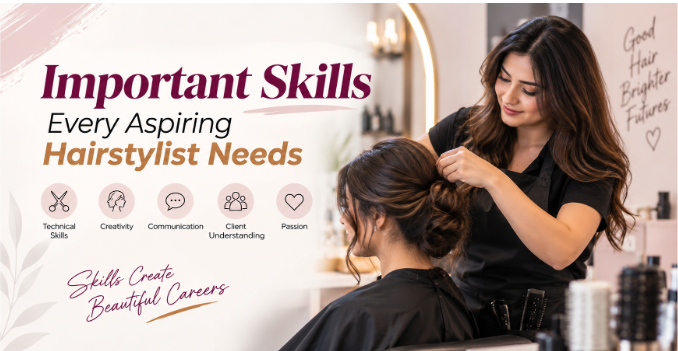
Technical training is only one part of becoming successful. A good hairstylist also needs strong interpersonal and professional skills.
Trends change constantly. Creativity helps you adapt existing techniques and create personalised looks.
Clients may not always know the exact hairstyle they want. You need to ask the right questions and understand their expectations.
Some hairstyles take considerable time, especially bridal and event looks. Patience helps maintain quality throughout the process.
Small details can make a major difference in the final hairstyle.
Professional hairstylists often work with multiple clients in a day. Managing appointments efficiently is essential.
Clean tools, proper product handling, and safe use of styling equipment are essential parts of professional practice.
Social media has become an important platform for beauty professionals. Instagram and other visual platforms allow hairstylists to showcase their work through:
A strong portfolio can sometimes communicate your abilities more effectively than a simple resume.
You can also use current beauty trends to create relevant content. For example, understanding Makeup Trends for Wedding Brides in 2026 can help aspiring beauty professionals see how bridal makeup and hairstyling work together to create a complete wedding look.
Not necessarily, but having additional beauty skills can increase your versatility. For example, a hairstylist who understands basic makeup or nail services may be able to provide a more complete experience for bridal and event clients.
If you want to expand your beauty-industry skill set, exploring Nail Art Training Classes can introduce you to another specialised service.
However, don't try to learn everything at once. Build strong hairstyling fundamentals first. Once you become confident, add complementary skills based on your career goals.
Decide whether you are more interested in salon hairstyling, bridal looks, fashion, freelancing, or eventually running your own business.
Research different courses and compare their curriculum, practical exposure, duration, trainers, and certification.
Don't depend only on classroom practice. Work on different hairstyles whenever possible.
Take clear photographs and videos of your work. Your portfolio can become an important tool when approaching salons or clients.
Working in a salon or assisting an experienced stylist can teach you how to handle real clients, time pressure, and different hair types.
Once you gain confidence, create a professional social media presence and showcase your best work consistently.
You can eventually specialise in bridal hairstyling, creative hair artistry, colour, event styling, or another area that matches your strengths.
The beauty industry continues to evolve as customers become more interested in personalised looks, professional grooming, special-event styling, and social-media-friendly transformations. This creates opportunities for skilled hairstylists who continue learning.
However, success doesn't happen simply because you complete a course. Your growth will depend on your technical ability, practice, customer service, portfolio, networking, ability to follow trends, and willingness to keep learning.
The strongest professionals treat hairstyling as an ongoing skill rather than something they finish learning after receiving a certificate.
If you're planning to enter the industry after 12th, keep these points in mind:
The future of hairstyling is likely to be shaped by personalisation, social media, specialised services, and independent beauty professionals.
Clients increasingly want hairstyles that match their personality, occasion, outfit, and overall appearance rather than simply copying a standard style.
This creates room for hairstylists who can combine technical skills with creativity. For new professionals, the opportunity is not only to find a salon job. With experience, they can develop a niche, build a personal brand, work independently, or create their own beauty business.
Choosing a hair styling course after 12th can be a practical way to turn creativity and interest in beauty into a professional career. From salon hairstyling and bridal services to freelancing, fashion, and entrepreneurship, the industry offers several paths for aspiring professionals.
The key is to choose quality training, practise consistently, build a strong portfolio, and continue upgrading your skills.
If you're serious about developing professional hairstyling skills, Triqos can be a useful starting point for exploring specialised beauty education and building a stronger foundation for your career.
Common Questions
Yes. Students can pursue hair styling courses after completing 12th. Beginner-friendly programs can teach foundational techniques such as cutting, styling, braiding, blow-drying, hair setting, and professional salon practices.
Yes. A beginner-focused course can help students understand basic hair techniques before moving into advanced styling. Practical training is particularly important because hairstyling requires regular hands-on practice.
You can work as a salon hairstylist, bridal hairstylist, freelance stylist, fashion or photoshoot stylist, or eventually start your own salon or beauty business.
Start with professional training, practise regularly, gain real-world experience, build a portfolio, improve your communication skills, and continue learning advanced techniques and current styling trends.
Yes. Beginner-level hairdresser courses can be suitable for students after 12th, particularly if they have little or no previous hairstyling experience. Look for programs that provide structured lessons and sufficient practical training.
Usually replies instantly
Experience world-class training firsthand.